
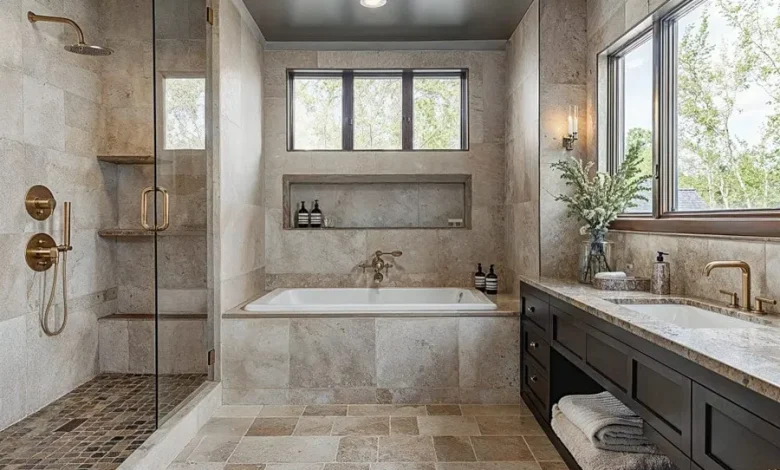
For decades, residential bathrooms were treated as purely utilitarian enclosures. Builders adhered to a clinical formula: glossy white subway tile, a fiberglass tub-and-shower insert, a generic sheet mirror, and a wall of polished chrome fixtures. These rooms served an undeniable domestic purpose, but they rarely contributed to the emotional resonance or aesthetic cohesion of the wider home.
Today, that transactional approach to bathroom design has dissolved. The modern bathroom is increasingly viewed as an intimate architectural retreat—a personal wellness sanctuary that commands the same design thoughtfulness, material richness, and spatial consideration as a primary living room or custom chef’s kitchen. Current renovation trends prioritize natural textures, unbroken sightlines, atmospheric lighting, and invisible technology, turning routine hygiene into an elevated, restorative daily ritual.
Embracing Tactile Warmth and Earth-Centric Palettes
The sterile, hyper-cool gray and stark white palettes that dominated the previous decade are officially being retired. In their place, designers and homeowners are leaning into grounded, earthy hues and rich textural finishes that soften hard surfaces and create a calming, organic envelope.
Rather than relying entirely on glossy ceramic tile, modern renovations frequently incorporate seamless plaster wall treatments, such as waterproof Moroccan Tadelakt, microcement, and breathable Roman clay. These mineral finishes introduce a soft, velvety movement across the walls, eliminating grout lines and absorbing excess harsh acoustic reverberations.
When tile is specified, the preference leans toward irregular, handcrafted varieties like Zellige or tumbled limestone. Because each tile features subtle variations in tone, depth, and edge beveling, the finished wall catches daylight dynamically rather than presenting an artificial, flat reflection.
Complementing these mineral walls is a resurgence of natural hardwood cabinetry. Rift-sawn white oak, rich walnut, and warm ash vanities bring organic grain patterns into the room, creating an intentional tactile counterweight to cool stone and metal.
Integrated Wet Rooms and Curbless Walk-in Architecture
The traditional partition between the bathtub and the shower is disappearing in favor of expansive, unified wet rooms. In a wet-room layout, the freestanding soaking tub, overhead rain shower, and handheld wands are enclosed within a single, fully waterproofed zone, separated from the rest of the bathroom by a single sheet of fluted or ultra-clear tempered glass.
Central to this layout is the zero-threshold curbless entry. By depressing the subfloor and installing single-directional linear trench drains along the rear wall, the main bathroom flooring can run flush straight into the shower floor without a physical curb or step.
This continuous floor plane creates an optical illusion of dramatically expanded square footage, allowing small and medium-sized bathrooms to feel spacious and uncluttered. It also embodies the principles of universal design, ensuring the bathroom remains safe, accessible, and barrier-free for homeowners across every stage of life without feeling institutional or clinical.
Sculptural Stone and Furniture-Grade Vanity Statements
The vanity is the indisputable architectural anchor of the bathroom, and the shift away from standard stock cabinetry has been decisive. Homeowners are treating vanities as bespoke pieces of fine furniture, prioritizing sculptural profiles, floating structural cantilevers, and dramatic stone slabs.
Integrated stone basins represent the pinnacle of this trend. Instead of dropping an undermount porcelain sink beneath a countertop, stone fabricators are carving seamless sinks directly out of heavily veined marble, quartzite, or soapstone. Flowing veining patterns run uninterrupted from the vertical backsplash down through the countertop and into the angled bottom basin.
To introduce warmth and character, designers are pairing these dramatic stone installations with mixed-metal plumbing fixtures. The sterile look of uniform polished chrome has given way to living finishes like unlacquered brass, brushed bronze, and matte gunmetal. Unlacquered metals age gracefully over time, developing an authentic, localized patina that mirrors the historical character of classic European estates.
Layered Architectural and Circadian-Aligned Lighting
Few elements compromise a bathroom renovation faster than improper lighting. Relying on a single row of bare bulbs mounted directly over a medicine cabinet casts harsh, unflattering shadows across the face and washes out delicate tile textures. Current bathroom design approaches illumination as a layered, three-dimensional system.
High-performance bathroom lighting integrates three distinct circuits:
-
Eye-level vertical task lighting: Sconces mounted on either side of the mirror at eye level project soft, diffused light across the face, eliminating downward shadows for grooming, makeup application, and shaving.
-
Concealed architectural accent lighting: Hidden LED channels tucked beneath floating vanities, behind backlit mirrors, and within shower wall niches wash surfaces in indirect, gentle illumination. These low-draw accents double as safe, glare-free nightlights for early morning or late-night trips to the bathroom.
-
Tunable circadian control: Modern smart lighting systems incorporate dim-to-warm LED drivers that automatically track natural sunlight patterns. The lighting delivers an energizing, crisp 4000K neutral spectrum during morning routines, then gradually shifts down to a warm, candle-like 2200K amber glow in the evening, signaling to your brain that it is time to unwind and prepare for restorative sleep.
Invisible Technology Built for Quiet Wellness
Smart home technology has evolved past the gimmicky stage of flashing touchscreens and internet-connected novelty mirrors. The most sophisticated bathroom renovations focus on invisible tech: mechanical innovations that work silently behind the drywall to maximize comfort and efficiency.
In-floor hydronic or electric radiant heating systems are rapidly becoming standard upgrades rather than luxury additions. Walking barefoot across naturally warmed stone or porcelain tile completely changes the sensory experience of a winter morning, while simultaneously accelerating the drying process of wet shower floors to prevent mildew formation.
Digital thermostatic shower valves represent another major leap forward. Hidden inside the wall cavity, these digital processors allow bathers to program exact water temperatures and flow distributions across multiple showerheads with the press of a single pre-set button.
Furthermore, wall-hung intelligent toilets with concealed in-wall tanks have crossed over from luxury hotels into standard residential design. Featuring integrated heated bidet seats, automated air-purification filters, self-cleaning ultraviolet wands, and motion-activated lids, these units save valuable floor clearance while delivering peerless hygiene.
A successful bathroom renovation is not about chasing fleeting decorative fads. By investing in honest, tactile materials, removing unnecessary physical barriers, and integrating gentle, responsive illumination, you can transform an ordinary washroom into an architectural sanctuary that elevates your daily routine and enriches your entire home interior.

