
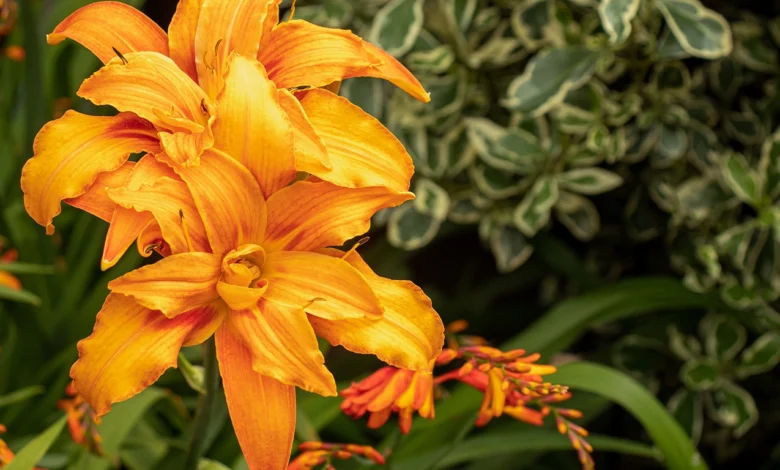
A stronger daylily collection usually comes from knowing which cultivars suit a garden’s soil, light, maintenance level and long-term design aims. Daylilies are often treated as easy filler plants because they are durable and generous in flower, but that view misses their range. Modern breeding has produced plants with marked differences in height, flowering season, habit, petal form, branching and repeat performance. For gardeners who want a collection rather than a random assortment, specialist knowledge is the factor that turns enthusiasm into good judgement.
That matters because daylilies can either settle into a garden for years with little trouble or become a muddled group of near-duplicates that never quite earns the space. A thoughtful collection offers sequence, contrast and reliability. It can give colour from early summer into late summer, support pollinating insects, and provide structure even when flowers are absent. The best collections are built with a clear eye on garden conditions and an equally clear understanding of what distinguishes one cultivar from another.
A professional view from the premier grower of Daylily plants SwallowtailDaylilies is that buyers should look beyond flower colour and focus first on performance, habit and suitability to site. Their advice is to use specialist sources when assessing collections daylilies plants for sale, because a good collection depends on cultivar accuracy, flowering sequence and informed selection rather than impulse purchase.
Why collecting daylilies is different from simply growing them
Many gardeners grow a few daylilies successfully without ever thinking in terms of a collection. That is perfectly sensible, but collecting introduces different standards. Once the aim shifts from owning several plants to building a coherent group, selection criteria change. Flower colour remains important, yet it becomes only one part of the decision. A collector looks for balance across the season, variation in form, compatibility of plant height, and enough distinction between cultivars to justify each plant’s place.
This matters because daylilies can look deceptively similar in catalogues. Two cultivars may appear distinct in promotional photography, yet in ordinary garden light they can read as almost identical. A specialist grower helps separate genuine difference from marketing language. For example, a gardener may think they need five yellow daylilies, when in practice one clear yellow, one near-apricot and one with an eye zone or different form will create a more useful and readable planting scheme.
Collecting also raises the question of purpose. Some gardeners want a botanical sense of order, choosing plants for breeding history, regional suitability or notable traits such as fragrance or rebloom. Others want ornamental effect in borders, where the collection should be judged not only plant by plant but also by how it behaves in a mixed setting alongside grasses, roses, salvias or late perennials. Specialist knowledge helps with both approaches by giving context. It explains why one cultivar is valued for branching, another for bud count, and another for foliage that remains tidy in British conditions.
A good collection therefore begins with discrimination. It avoids buying too many plants that all peak at the same moment, all sit at the same height, or all collapse visually after flowering. It also resists the assumption that rarity automatically means merit. In daylilies, as in many ornamental groups, a celebrated cultivar may not be the best fit for every garden. The soundest collections are shaped by evidence, not novelty alone.
The role of specialist knowledge in choosing the right cultivars
Specialist knowledge matters most at the point of selection. A daylily can be beautiful in isolation yet disappointing in a real garden if it is too tall for a windy border, too pale for strong sun, too late for a short display window or too lax in habit for a formal setting. Specialists understand how a cultivar performs outside a show bed or catalogue description. That guidance helps gardeners buy plants that will do the job expected of them.
One of the first points a specialist considers is flowering season. Daylilies are not a single event. Early, mid-season and late cultivars can be combined to extend interest for many weeks. Repeat-flowering kinds may add a second phase of colour if conditions suit them. Without that knowledge, gardeners often buy a batch that blooms together and leaves a gap afterwards. With it, they can build sequence into the planting from the start.
Form is another area where expert advice improves results. Daylilies may be trumpet-shaped, flat-faced, recurved, spider-form, ruffled or heavily textured. Some read best from a distance, while others reward close viewing. A specialist can advise whether a flower’s shape will hold well in a border, whether its colour is likely to bleach, and whether its markings will still be visible in ordinary weather rather than perfect display conditions. This is practical information, not collector’s trivia.
Then there is plant habit. Gardeners often concentrate on the flower and neglect the clump. Yet the foliage is present for much longer than the bloom. Specialists can indicate which cultivars make clean, upright fans, which spread steadily, and which may need more space than expected. In a mixed ornamental garden, that distinction matters. A clump with strong foliage can anchor a border, while one with weak foliage may need careful placement among neighbouring plants.
Accuracy is equally important. Specialist nurseries protect the integrity of a collection by maintaining correct identification. For collectors, mislabelling is not a small inconvenience but a structural problem. It distorts flowering plans, colour schemes and breeding records. Buying from informed growers reduces that risk and gives access to clearer notes on each cultivar’s strengths and limitations. That level of precision is what separates a collection with purpose from a tray of unrelated purchases.
Building a collection for British gardens
British gardens ask for realism. Daylilies are adaptable, but performance is still shaped by climate, soil and garden style. A collection built for a dry, hot inland garden will not necessarily suit a damp border in the North or an exposed coastal plot. Specialist knowledge becomes especially useful here because it connects cultivar choice with local growing conditions rather than broad claims of hardiness.
In much of Britain, drainage is a key issue. Daylilies like moisture in growth but generally resent sitting in waterlogged ground. Heavy soils are workable, but they benefit from improvement with organic matter and, in some sites, a raised planting position. Specialists can advise which cultivars are most forgiving and which are better reserved for gardens with freer-draining conditions. That saves money and avoids the slow decline that gardeners sometimes mistake for poor luck.
Light is another common point of misunderstanding. Daylilies will flower in part shade, but flowering is usually better in full sun or bright open positions. At the same time, very dark red or purple cultivars may hold colour better where they avoid the harshest midday heat. In Britain, where light intensity is lower than in hotter regions, this can work in the gardener’s favour, but only if plant choice is matched sensibly to site. A specialist source helps interpret those subtleties.
British gardeners also tend to value planting combinations. Daylilies need not sit in a dedicated collection bed to be appreciated. They can be excellent within mixed borders, especially where their strappy foliage contrasts with softer forms. Apricot and copper tones sit well with grasses and airy perennials, while clearer yellows and creams can brighten greener, cooler schemes. Strong reds need more care because they can either enrich a planting or dominate it. A good collection thinks in combinations, not just individual blooms.
Maintenance expectations matter as well. Many people want handsome plants that do not demand constant intervention. Daylilies meet that brief better than many summer-flowering perennials, but they are not entirely self-managing. Clumps may need dividing after several years, spent scapes look better removed, and weeding around young plants remains important. A specialist helps gardeners choose cultivars that reward ordinary care without requiring nursery-level attention. That is especially useful for gardeners building a collection to last rather than a display for one season.
What to look for when assessing quality and value
A daylily collection succeeds when quality and value are judged properly. The cheapest plant is not always the best buy, and the rarest is not automatically the most rewarding. Specialist knowledge helps gardeners look at value in horticultural terms: health, identity, longevity, performance and distinctiveness. Those measures are more useful than price alone.
Healthy stock is the first requirement. Good daylilies should arrive with firm roots, sound crowns and no sign of rot or severe stress. Foliage condition can vary with the season, but the plant should show enough vigour to establish promptly. Specialists tend to understand packing, dispatch timing and aftercare, which improves the odds of success. For collectors, that reliability is part of the value being purchased.
Clear descriptions are another sign of quality. A good supplier explains height, flowering time, colour, form and growth habit in practical terms. Better still, they indicate where a cultivar excels and where it may disappoint. That honesty is a mark of expertise. A gardener trying to compare collections daylilies plants for sale across different suppliers will quickly notice that not all listings are equal. Some sell by image and fashion, while others sell by informed description. The latter is far more useful when building a lasting collection.
Bud count and branching are worth attention, but they should not be read in isolation. A heavily branched scape sounds impressive, yet garden performance depends on weather, establishment and the plant’s general constitution. Likewise, an enormous bloom may attract attention but can look out of scale in an average border. Specialists help interpret these features sensibly. They explain when a trait has real garden value and when it mainly suits exhibition interest.
Distinctiveness is often overlooked. A collection should not become crowded with minor variations of the same idea. Before buying a new cultivar, it is worth asking what it adds. Does it extend the season, bring a new form, improve substance, or offer a more useful planting colour? If not, the space might be better given to a truly different selection. This is where specialist advice can save a collector from expensive repetition.
Finally, value includes trust. A specialist grower brings continuity, records and plant knowledge that general retail sources may not provide. That trust is particularly important when a gardener wants to expand a collection over time and keep its structure coherent year after year.
Avoiding common mistakes that weaken a collection
Even experienced gardeners can build a weak daylily collection if purchases are made too quickly. One common mistake is buying mainly by colour. Colour is easy to respond to, especially online, but it can be misleading. Camera settings, weather and display conditions all affect how a bloom appears. More importantly, colour alone tells a gardener almost nothing about season, scale, habit or garden usefulness. A collection chosen on colour alone often ends up with flowers that clash in form or peak all at once.
Another frequent error is ignoring mature size. Daylilies sold as small divisions can look modest at planting time, but established clumps may occupy far more room than expected. If spacing is poor, the border loses definition and maintenance becomes awkward. A specialist helps gardeners imagine the plant three years ahead rather than judging it as it appears in a pot on purchase day.
The pursuit of novelty can also be unhelpful. New introductions are appealing, and many are excellent, but novelty should not replace selection discipline. Some newer cultivars are bred for visual impact under ideal conditions rather than broad garden reliability. Others are genuinely strong plants that deserve attention. The difficulty for a non-specialist is telling the difference. That is why expert guidance is so valuable at the buying stage.
A further mistake is neglecting flowering sequence. Gardeners may acquire several admired cultivars from recommendation lists, only to discover that they all bloom during the same fortnight. The result is a brief surge followed by a long lull. A stronger collection uses overlapping windows of performance so that one group takes over as another fades. This is one of the simplest improvements a specialist can suggest, yet it transforms how a collection works in the garden.
Finally, many gardeners underestimate the importance of records. Labels fade, memories become unreliable, and after a few seasons the identity of similar plants can become uncertain. For a true collection, records are not fussy bureaucracy but basic stewardship. Accurate labels, a planting plan and brief notes on flowering time and performance help future decisions and protect the value of the collection itself.
How specialist-led collecting creates better gardens over time
The lasting benefit of specialist knowledge is not merely better shopping but better gardening. When a daylily collection is built with clear judgement, it improves year by year. Clumps settle, combinations become more effective, and the gardener learns the strengths of each cultivar in a specific place. That gradual improvement is one of the chief pleasures of collecting. It rewards patience and observation rather than quick consumption.
A specialist-led approach also makes a garden more personal. Instead of following fashion, the gardener begins to edit with confidence. Certain colours may prove more useful than expected. Some forms may work brilliantly against grasses or shrubs, while others belong in a more dedicated bed. Over time, the collection starts to reflect both informed choice and lived experience. It becomes more than a set of purchased plants; it becomes part of the character of the garden.
This approach supports resilience as well. A mixed and well-planned daylily collection spreads risk. If one cultivar has a poor year, others may still perform strongly. If weather shortens a particular flowering period, the broader sequence remains intact. Collections built with expert input usually have that kind of structural strength because they are based on performance, not just appearance. They are designed to cope with ordinary garden realities.
There is also a wider horticultural value in supporting specialist nurseries. These growers preserve diversity, maintain named cultivars correctly and continue to share the knowledge that helps gardeners make better decisions. Without that network of expertise, collecting becomes shallower and more vulnerable to mislabelling, narrowing choice and short-term trends. A strong daylily culture depends not only on breeders and enthusiasts but on informed growers who can connect plants with the right gardens.
Better daylily collections, then, begin with specialist knowledge because knowledge improves every stage of the process. It sharpens selection, prevents repetition, protects quality and helps a gardener think in seasons rather than moments. The result is not merely a larger assortment of plants, but a more coherent, reliable and satisfying part of the garden. In ornamental gardening, that is the difference between owning daylilies and truly collecting them.


