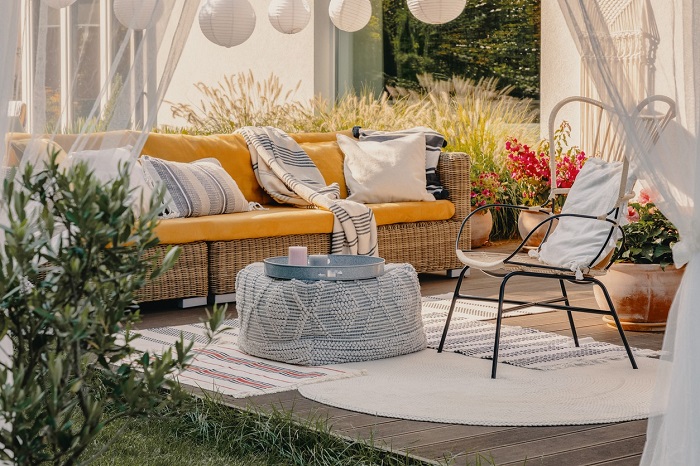
Every homeowner with a patio or deck has experienced that sudden spike of adrenaline during an unexpected thunderstorm. A sharp gust rattles the windows, followed closely by the violent scrape of powder-coated aluminum or woven resin tumbling across the pavers. High-end outdoor furniture represents a major financial investment, but during severe windstorms, an unsecured patio set transforms into an array of destructive projectiles. Chairs can crack sliding glass doors, dent exterior siding, shatter railings, or end up mangled in a neighbor’s yard.
Keeping patio furniture grounded is not simply a matter of buying the heaviest set on the showroom floor. It requires an understanding of aerodynamic lift, smart spatial positioning, and mechanical anchoring techniques tailored to your specific outdoor surface. Whether you are dealing with seasonal coastal gales, open plains squalls, or high-altitude mountain gusts, a few deliberate adjustments can keep your outdoor living space fully secure.
Understanding Aerodynamic Lift and the Sail Effect
Furniture rarely blows away from a pure horizontal push. Instead, it takes flight because of aerodynamic lift. When high-velocity wind encounters a solid barrier, like a glass patio table or a tall chair backrest, the air splits. Air moving beneath the seat or tabletop creates a high-pressure zone, while air rushing over the top drops in pressure. The resulting differential generates upward suction that overcomes the furniture’s physical weight.
Thick, water-resistant cushions compound this problem significantly. Outdoor cushions are essentially buoyant, lightweight wings wrapped in slick synthetic fabric. The moment a gust wedges itself beneath an unsecured cushion, it lifts the cushion like a sail. In many cases, the lifting force on the cushion drags the entire chair backward, tipping the frame over and allowing subsequent wind gusts to catch the undercarriage. Recognizing that your furniture functions like an air foil is the first step toward neutralizing wind forces before severe weather hits.
Mechanical Anchoring Solutions by Surface Type
The most reliable way to secure furniture permanently or semi-permanently is by anchoring frames directly to the ground. The correct hardware depends entirely on whether your patio is framed from timber, poured in concrete, or laid over turf.
Securing Frames to Wood and Composite Decks
Decks offer excellent structural framing for anchoring hardware. If you prefer not to drill permanent holes into your deck boards, look for specialized deck anchor pegs and fishbone tension springs. These stainless-steel anchors slip between the narrow gaps of standard deck planks, rotate ninety degrees underneath, and lock against the bottom of the boards using spring tension. You can then thread marine-grade webbing straps or heavy-duty bungee cords through the anchor eyelets to pin chair legs and table bases down without damaging the wood or composite finish.
For high-wind coastal environments where temporary pegs might shift, installing flush-mount stainless-steel D-rings directly into structural joists provides an unyielding anchor point. When combined with turnbuckles or low-profile ratchet straps, this hardware holds heavy lounge sets immovable through tropical storm-force gusts.
Anchoring into Concrete Slabs and Pavers
Concrete patios provide immense mass, but installing fasteners requires masonry tools. The cleanest method involves drilling small pilot holes with a rotary hammer and setting expansion anchors or drop-in threaded anchors flush with the concrete surface. When stormy seasons arrive, you can thread eye bolts into the recessed anchors, secure the furniture legs using heavy-duty straps, and remove the eye bolts in the spring, leaving your patio surface completely flat and trip-free.
If you have sand-set interlocking brick pavers, never bolt furniture directly into an individual paver. Pavers are held in place only by friction and joint sand; a powerful updraft can lift both the chair and the brick together. Instead, run anchor cables through the paver joints down into the compacted crushed stone sub-base using earth-anchor drive rods, or rely on ballast methods rather than surface drilling.
Ground Anchors for Lawns and Soil
When outdoor seating sits on a lawn, gravel patio, or natural dirt pad, spiral earth augers provide remarkable holding capacity. These heavy-gauge steel anchors screw deep into the subsoil, mirroring the mechanics of mobile home tie-downs. A set of four eighteen-inch spiral anchors driven into undisturbed soil can resist several hundred pounds of vertical pull force, providing a rock-solid foundation for steel cables connected to furniture frames.
Ballast Strategies and Hidden Internal Weights
If drilling into your patio is out of the question—a common restriction for apartment renters or homeowners with sensitive natural stone—you must artificially increase the furniture’s mass.
-
Fill hollow frames with sand: Many budget-friendly dining sets and chaise lounges are manufactured from extruded hollow aluminum or tubular steel. Pry open the plastic foot end-caps or armrest plugs and use a narrow funnel to fill the hollow cavities with dense, dry silica sand or fine metal shot. This internal ballast adds fifteen to twenty pounds of low-center-of-gravity mass to each chair without altering its external appearance.
-
Use weather-resistant ballast bags: Heavy-duty saddlebag-style weights made from 600D marine polyester can be filled with pea gravel or dry sand and strapped across the lower horizontal stretchers of tables and chairs. Placing the weight at the lowest structural point of the frame prevents the furniture from acting top-heavy.
-
Interlocking weighted base plates: Cast-iron or dense rubberized commercial weight plates can be tucked discreetly beneath deep-seating modular sectionals, providing substantial ballast that remains completely hidden behind decorative kickboards or wicker skirts.
The Power of Interlocking and Strategic Grouping
Individual chairs are remarkably vulnerable to wind, but clustered objects behave differently. An isolated aluminum dining chair weighing fourteen pounds can be picked up by a forty-mile-per-hour gust. However, six identical chairs fastened securely together present a combined mass of nearly one hundred pounds, along with a significantly broader geometric footprint that resists tipping.
Use furniture gang clamps or heavy-duty outdoor ratchet ties to bind sectional pieces and dining chairs together ahead of forecasted storms. Push your dining chairs completely underneath the table so the seat surfaces are shielded by the tabletop, then run a single broad cinch strap around the entire perimeter of the chair legs and the table base. This converts multiple individual components into a single, cohesive, heavyweight block that wind cannot easily leverage.
Furthermore, leverage your home’s exterior architecture. The leeward side of an exterior wall, an alcove created by an L-shaped exterior corner, or the space directly underneath deep architectural eaves experiences significantly reduced wind velocity. Moving lightweight sets against these protective structural barriers cuts wind exposure in half.
Cushion Management and Umbrella Precautions
Patio umbrellas are responsible for more wind-related property damage than all other outdoor accessories combined. A closed umbrella still catches significant air, but an open umbrella acts like a hot-air balloon with an anchor.
Never rely on lightweight decorative cast-stone stands for freestanding market umbrellas. A table-mounted umbrella requires a minimum base weight of fifty pounds, while a freestanding market umbrella needs at least seventy-five to one hundred pounds. Cantilevered or offset umbrellas, which hang from a side-mounted arm, require four-hundred-pound weighted bases or permanent concrete deck mountings to prevent catastrophic overturning. During wind advisories, crank the umbrella completely down, wrap the canopy tightly using its integrated tie strap, and ideally lift the pole from the base to store it horizontally indoors or along an exterior wall.
For seating cushions, rely on high-strength Velcro straps, integrated fabric ties, or marine-grade snaps screwed into the underside of the chair frame. If sustained winds are projected to exceed thirty-five miles per hour, bring cushions indoors entirely. Stashing them in a garage, a heavy-duty latched deck box, or an interior storage closet instantly strips your furniture of its most aerodynamic surface.
Investing in Aerodynamic, Vented Protective Covers
Covering furniture during the off-season is standard maintenance, but a poorly fitting tarp often makes wind vulnerability worse. Cheap plastic tarps tied with loose rope act like giant spinnakers, filling with air, billowing violently, and dragging the furniture along behind them.
High-performance protective covers incorporate baffled mesh air vents along the side panels. These vents permit high-pressure trapped air to escape freely while blocking driving rain from entering.
Ensure any cover you purchase includes heavy-duty quick-release buckle straps that lock around each individual leg, along with an elastic hem cord featuring a ratcheting barrel lock. When the hem is pulled taut beneath the base of the frame, air cannot get underneath the cover to balloon it outward, keeping your entire patio ensemble protected, stable, and firmly planted through the harshest seasonal storms.